
Material, memories & room fit
Wooden Map vs Travel Gallery Wall: Places, Photos or Both?
Compare a wooden map with a travel-photo gallery wall, then plan a layout that gives places and personal moments room to tell the story.
The short answer
Do you want to see where you travelled, or what you remember?
Choose a wooden map when geography and a sculptural wall feature matter most. Choose a photo gallery when faces, scenes and individual moments carry the story. Combine them when you want the map to locate the journey and photographs to explain why it mattered.
A physical geographical feature with visible relief and compatible travel markers.
Photographs of people and moments, arranged in a layout you can expand or refresh.
See the difference
Two ways to put your world on the wall.
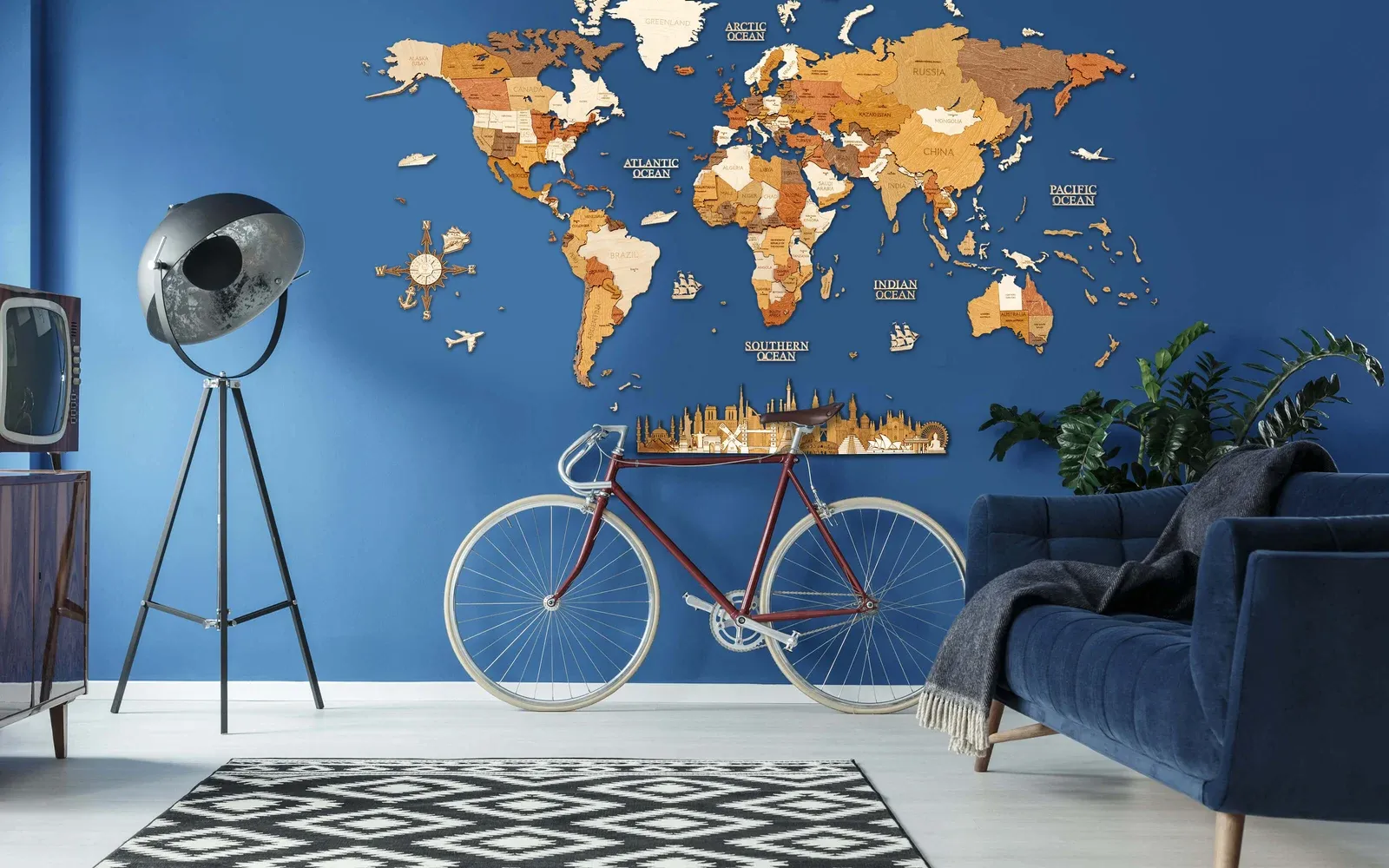
A map assembled from separate landmasses, with wood tones, visible edges and the wall showing between continents.
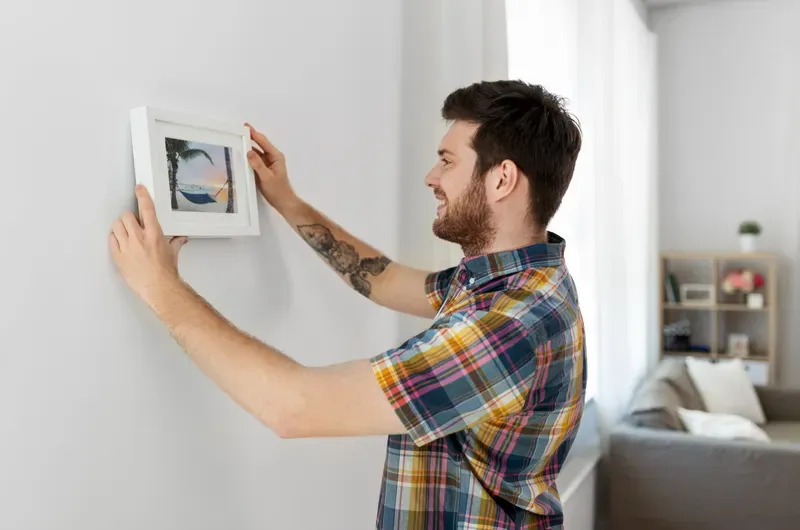
Photographs of people and moments, arranged in a layout you can expand or refresh.
Manufacturer examples shown in different settings, not at a matched scale. Construction and included accessories vary by product.
The practical differences
Compare the display you will actually use.
| Decision | Wooden map | Travel-photo gallery wall |
|---|---|---|
| Appearance | Separate wooden pieces add depth; detail varies by model. | Separate photographs create a personal, varied composition. |
| Travel tracking | Use markers compatible with the selected map. | Photos record moments; location labels add geographical context. |
| Installation | Plan the layout; attach pieces with the supplied system. | Plan each frame and fixing before hanging. |
| Display cost | Map, optional accessories, delivery and destination charges. | Prints, frames, glazing, fixings and delivery. |
| Moving or changing | Move pieces individually; removal depends on wall and adhesive. | Swap accessible prints; new frames may need new fixings. |
| Care | Follow product instructions; comparative lifespan is untested. | Care depends on print, frame and glazing. |
Where wood makes sense
A display built around places.
- A map connects scattered destinations in one geographical view.
- Wooden relief gives the display a physical focal point.
- Photographs can complement the map without replacing it.
The trade-offs
What to weigh before choosing.
- A map cannot show the people and moments in your photographs.
- Both layouts need wall planning and suitable fixings.
- Adding too many photographs can crowd a map’s islands and labels.
Geography and memories do different jobs
A wooden map gives a trip a location. A photograph gives it a face, a colour or a moment. For a traveller who loves tracing routes, the map can be the anchor. For someone whose favourite memories are people rather than destinations, photographs may deserve more space.
Neither choice needs to fill the entire wall. Start with the story you want to notice each day, then choose the display that makes it easiest to read.
Plan a map-and-photos layout
Try one of these arrangements with paper outlines before making holes or applying adhesive:
- Map above, photographs below: keep a clear lower row of frames, with space for the map’s southern islands.
- Map in the centre, photographs to one side: group a few related memories beside the relevant journey without trying to align every photograph with a country.
- Separate zones: place the map on the main wall and photographs on an adjacent wall or shelf when a combined arrangement would feel crowded.
These are editorial layout suggestions, not tested mounting plans. Measure your actual map, including separate islands, and each frame’s outer dimensions. Leave enough access for any travel markers. Use the mounting instructions for each object rather than assuming one fixing suits everything.
Choose a rhythm you can maintain
A small, consistent set of frames is easier to extend deliberately than a wall filled on day one. Decide whether you want to add a photograph after each trip or occasionally replace an existing image. Check that the frames open and that replacement prints fit.
For a gift, a photograph can make the story immediately personal, while the map leaves room for future journeys. Choose photos the recipient is comfortable displaying, especially in a shared office or guest room.
Before you buy
Make the comparison specific to your wall.
- Choose a few photographs with a clear shared story.
- Mock up the map footprint and outer frame sizes with paper.
- Leave the map’s islands, labels and markers accessible.
- Check frame access if you plan to replace the photographs.
How we compared these formats
We compared manufacturer descriptions, installation information and the pictured examples. The verdicts are editorial judgments for the stated use cases, not results of a controlled hands-on test. The table uses qualitative observations rather than a universal score.
Examples: 68travel 3D Wooden World Map; Frameology travel gallery planning example. Prices, shipping, removal performance and longevity are not assumed to be equal across a category. Confirm the selected configuration before ordering.
Sources and research notes (2)
- Wooden World Map (opens in a new tab)68travel · Retrieved Sep 9, 2026Manufacturer documentation and real imagery for the named format or product; no independent hands-on testing, universal durability claims or verified landed-price comparison.
- Frameology travel gallery planning example (opens in a new tab)Frameology · Retrieved Sep 11, 2026Provider documentation for the named example. Layout suggestions are editorial; no matched testing, universal durability or price claim.